
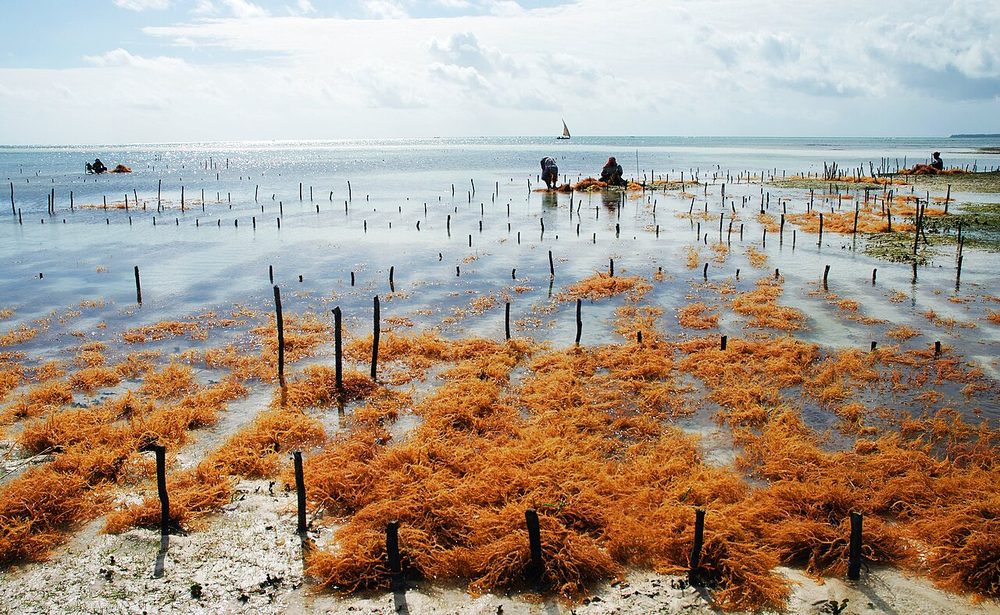
 Photo: Uroa, Zanzibar, Tanzania
Programme 02 · Governments & coastal communities
02 — BlueHarvest Launchpad
Launch a real seaweed operation — a working pilot with real production and first market outputs.
€50k–200k · 4–9 months
Sirputis moves beyond planning into hands-on implementation — delivering a working pilot with real operations and first market outputs.
 01 — SeaValue CatalystFeasibility & value-chain design
 02 — BlueHarvest LaunchpadCommunity pilot with local processing
 03 — Ocean Circular HubModular processing hub at regional scale
What we do
- Design and install modular pilot processing units (extraction, blending, filling)
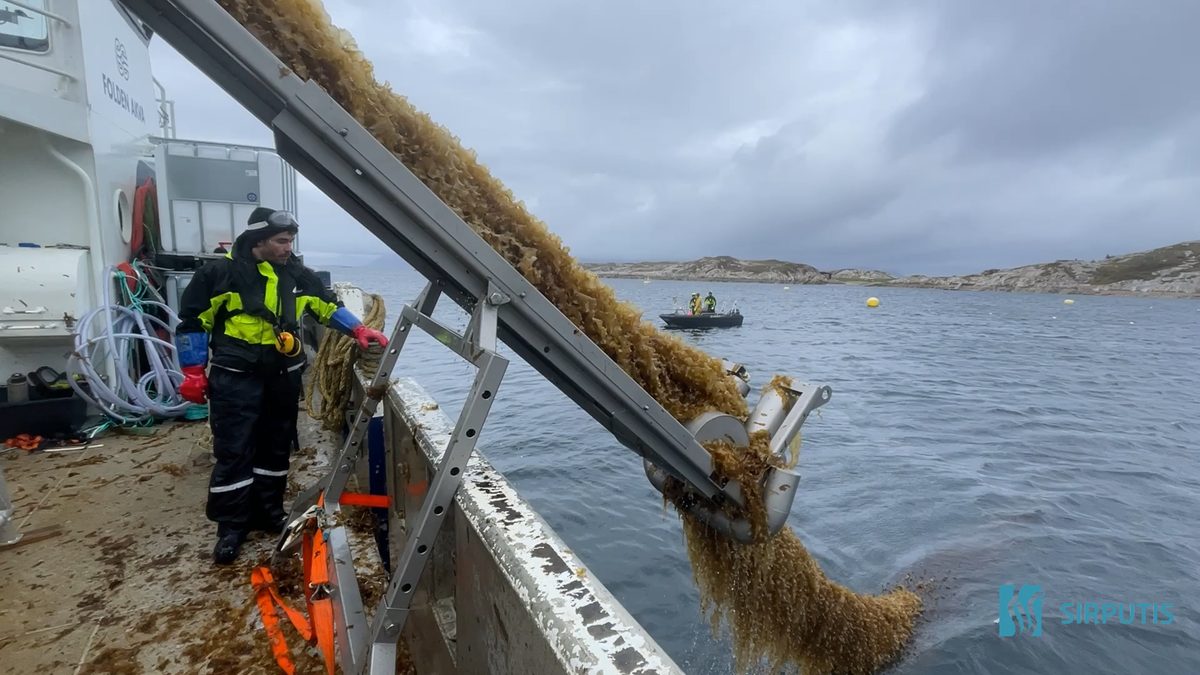
- Set up cultivation, harvesting systems, and basic handling equipment (ropes, floats, PPE)
- Train local teams in operations, processing, and quality control (drying, filtration, QA)
- Develop and test initial products and formulations (food, feed, biomaterials)
- Run pilot production, field trials, and first community-level applications
- Implement quality control (harvest, handling, processing)
- Monitor performance and optimize operations
- Collect data (yields, costs, product performance)
- Prepare market-ready products and validated use cases (1–2 pilot products)
- Support initial market entry and early revenues
How the pilot runs
- 01
Set up
Install modular pilot processing units, cultivation and handling systems. - 02
Operate & train
Run pilot production with local teams; embed quality control and monitoring. - 03
Validate & sell
Collect yield and cost data, finalise 1–2 market-ready products, support first sales.
Why Sirputis
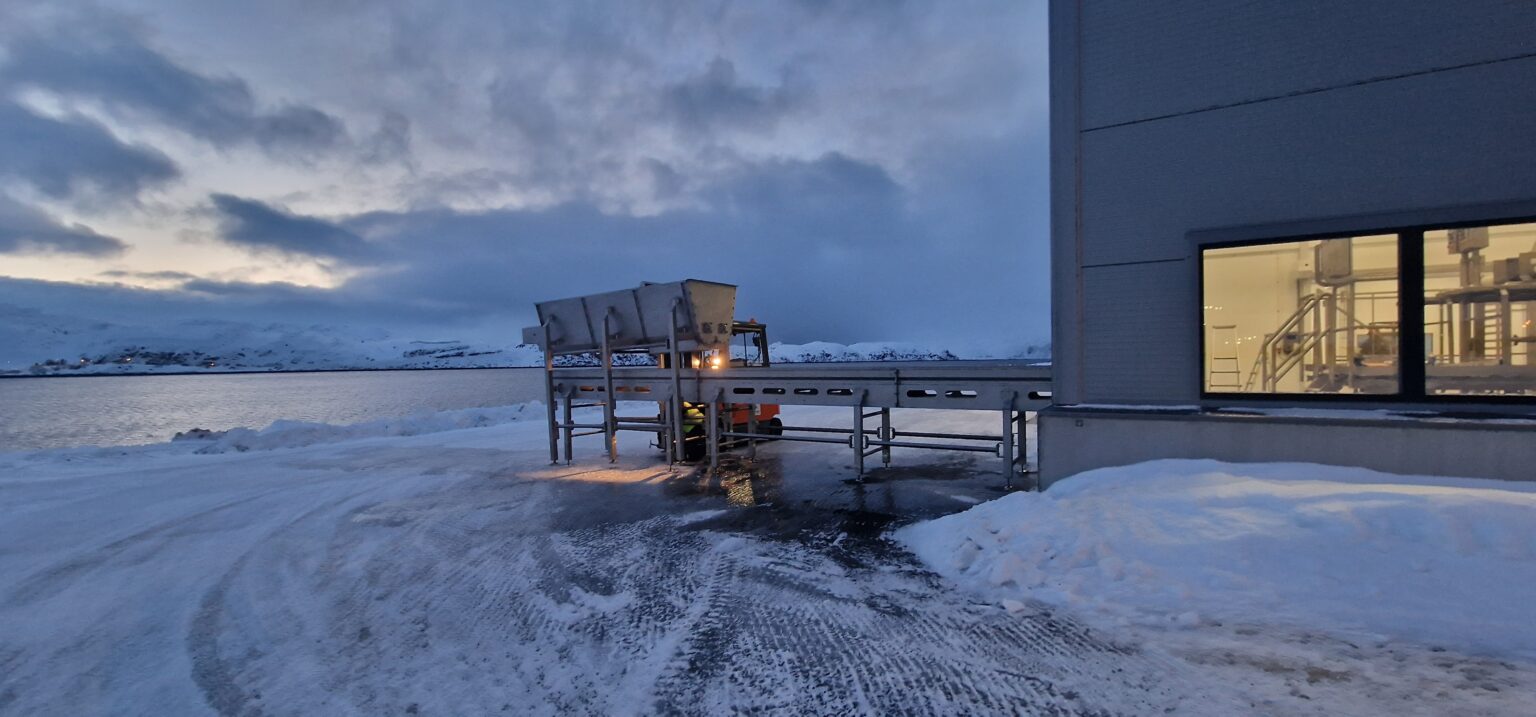
We build the equipment we install
The same engineering behind our 6,000 t/y processing line above the Arctic Circle in Hammerfest.
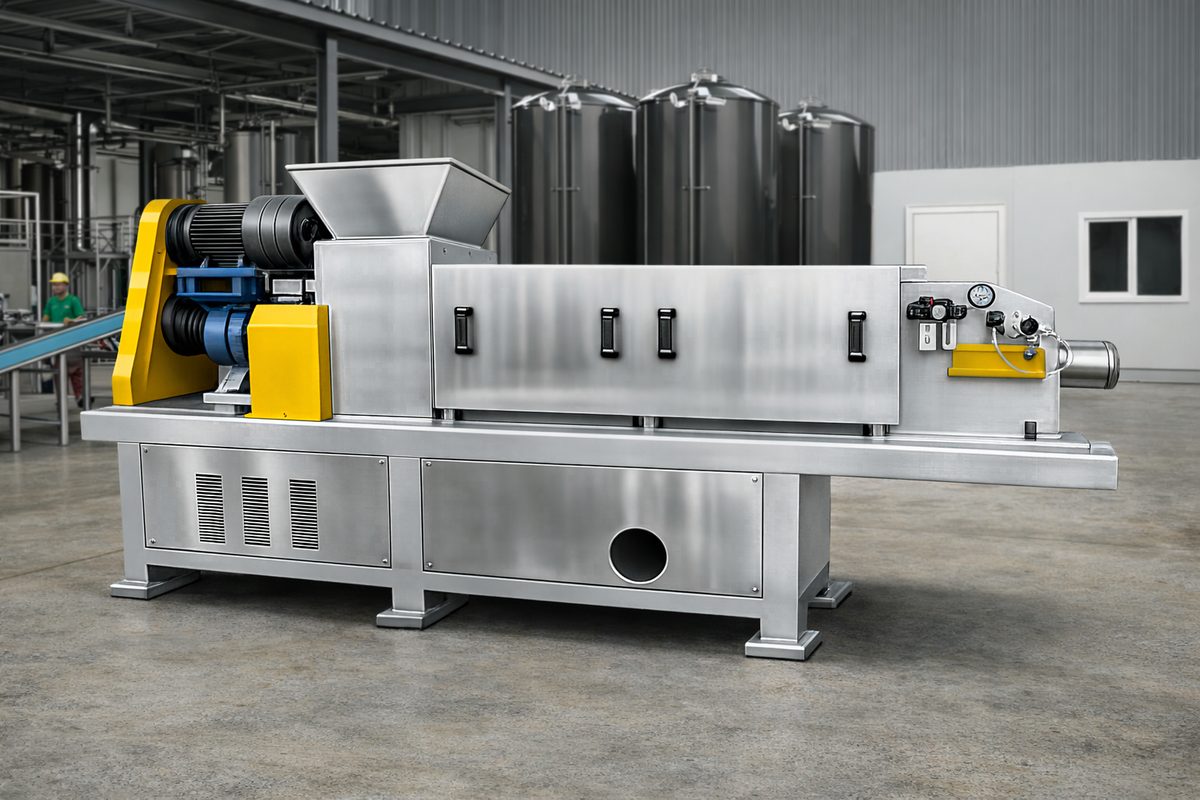
Manufactured in-house
Presses, dryers and extraction units from our own workshop in Lithuania — no third-party black boxes.

Evidence for funders
Pilot data — verified yields, unit costs and product performance — packaged into the evidence pack funders need to release scale-up finance: measured recovery rates, capex/opex per tonne and third-party-ready reporting.
Sized within the resource
01 · Standing biomass
What the coast holds — surveyed or modelled per site and species. Example: Norway's Laminaria hyperborea forests ≈ 60 million tonnes.
02 · Sustainable harvest
The fraction that can be taken with regrowth intact. Example: 150–180 kt/year in Norway, 0.25–0.30% of the stock, fields regrown in 3–5 years.
03 · What the plant takes
Programme capacity is set inside line 02, never above it. Example: a 6,000 t/y plant fed entirely from that harvest would take 3.3–4% of it.
Every programme is capacity-matched to the resource assessment before a machine is specified — the Sirputis biorefinery design tool computes these three lines per site. Sources: Vea & Ask 2011, J. Appl. Phycol.; Norwegian Blue Forests Network kelp brief. Full worked example →
Client outcome
✔ Operational pilot with validated processes and products✔ Local capacity built and first market traction
Working with development finance?
Prove the model in the field — evidence packages that unlock scale funding.
Our programmes are structured for donor procurement, state aid and blended finance — designed to fit NORAD, World Bank and EU instruments.
Part of the Sirputis industry development programmes
Related programmes: Seaweed Value Chain Strategy Programme, Seaweed Value Chain: From Farming to Market Opportunities, Seaweed Industry Scale-Up Programme. See the full development programmes range, or how complete lines fit together in the modular seaweed biorefinery guide.
Explore the development programmes → Book a 20-minute programme call