
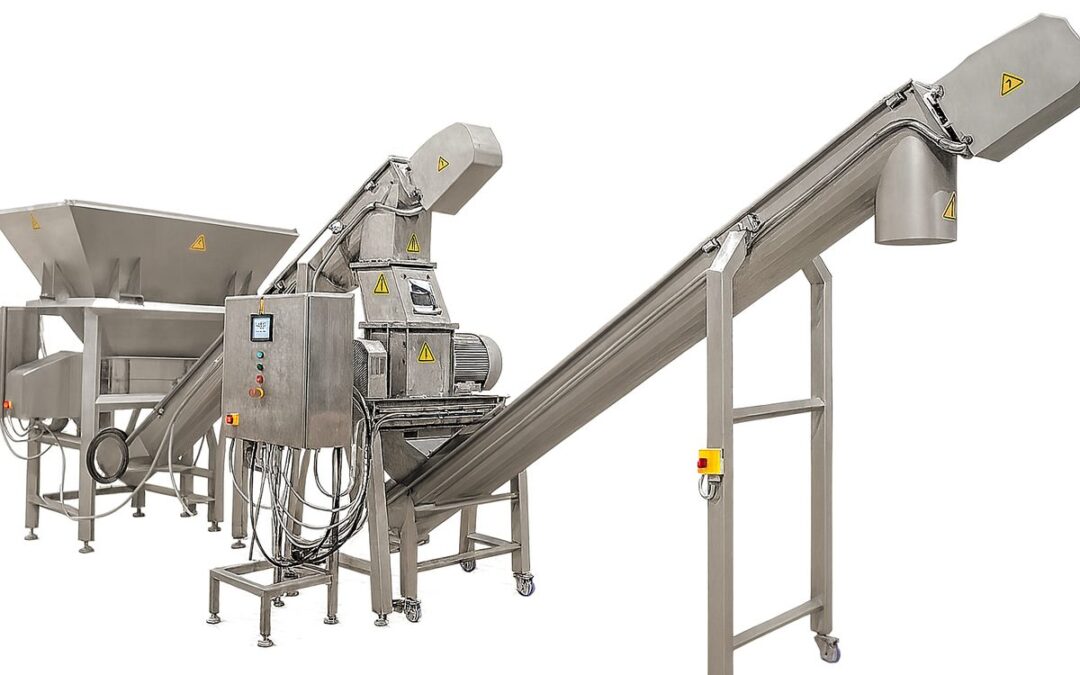
A modular seaweed biorefinery is a processing facility built from standardised, containerised units — washing, screw-pressing, drying, size reduction and extraction — that can be deployed near the shoreline and scaled up in stages rather than built as a single large plant from day one. For processors and investors evaluating seaweed as a feedstock, the modular approach directly addresses the two hardest constraints in the industry: biomass that degrades within 24-48 hours of harvest, and demand that is still uncertain enough to make a single monolithic investment risky.
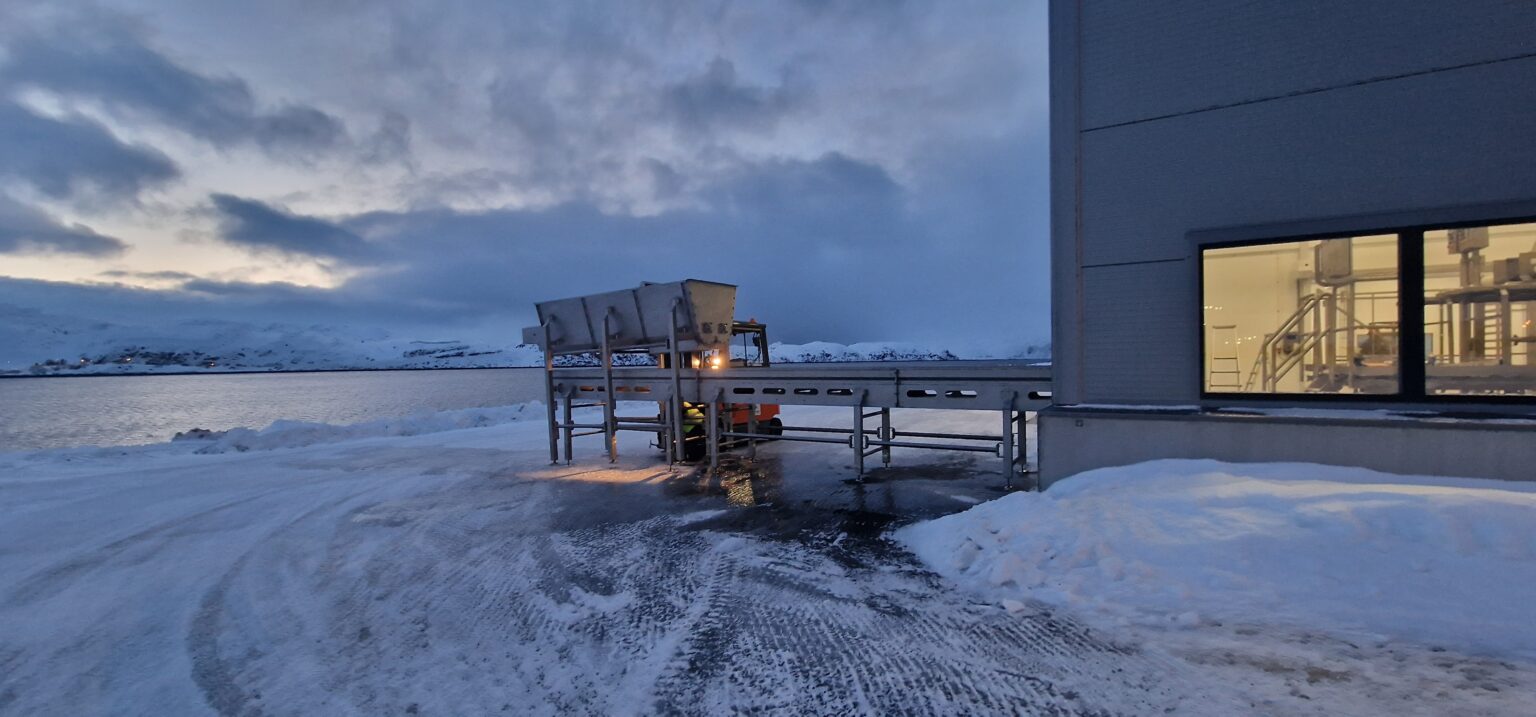
This guide sets out what a modular seaweed biorefinery actually contains, how it differs from a conventional plant, and what questions to ask before committing capital.
Why Modular Design Matters for Seaweed Specifically
Seaweed is not grain or timber. Fresh biomass loses quality fast, and most coastal harvest sites are far from existing industrial infrastructure. A modular seaweed biorefinery solves this by moving the first processing steps — washing, dewatering, initial drying — to the coast in containerised units, close to the farm or harvest point. Stabilised biomass, whether wet-pressed or dried, can then travel further to a central facility for extraction of alginate, fucoidan, carrageenan or agar without losing the compounds that make it valuable.
This is the same logic behind our 6,000 tonne/year Ascophyllum line delivered in Hammerfest, Norway, which handles both wet and dry biomass streams from a single coastal footprint.
The Core Modules in a Modular Seaweed Biorefinery

1. Washing and Debris Removal
Removes sand, salt crust, epiphytes and shell fragments before any mechanical or thermal step. Poor washing carries through to every downstream process and degrades extract purity later.
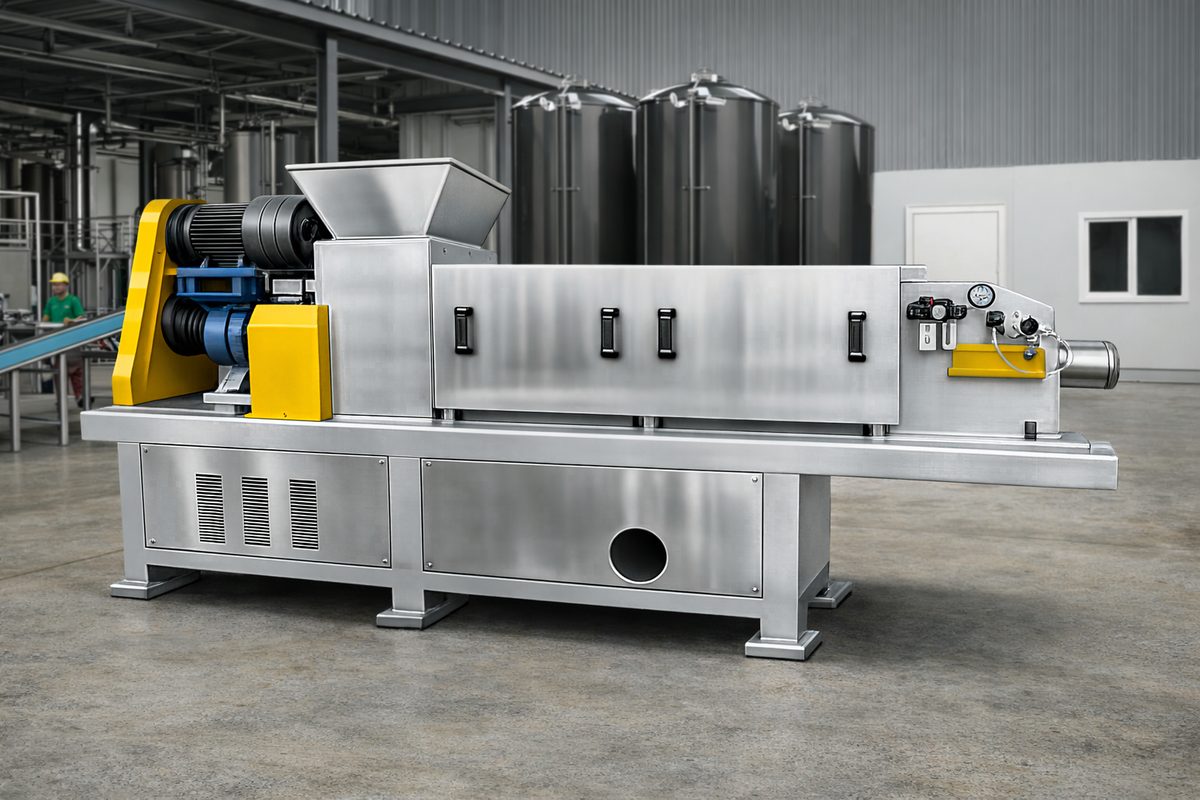
2. Screw Pressing
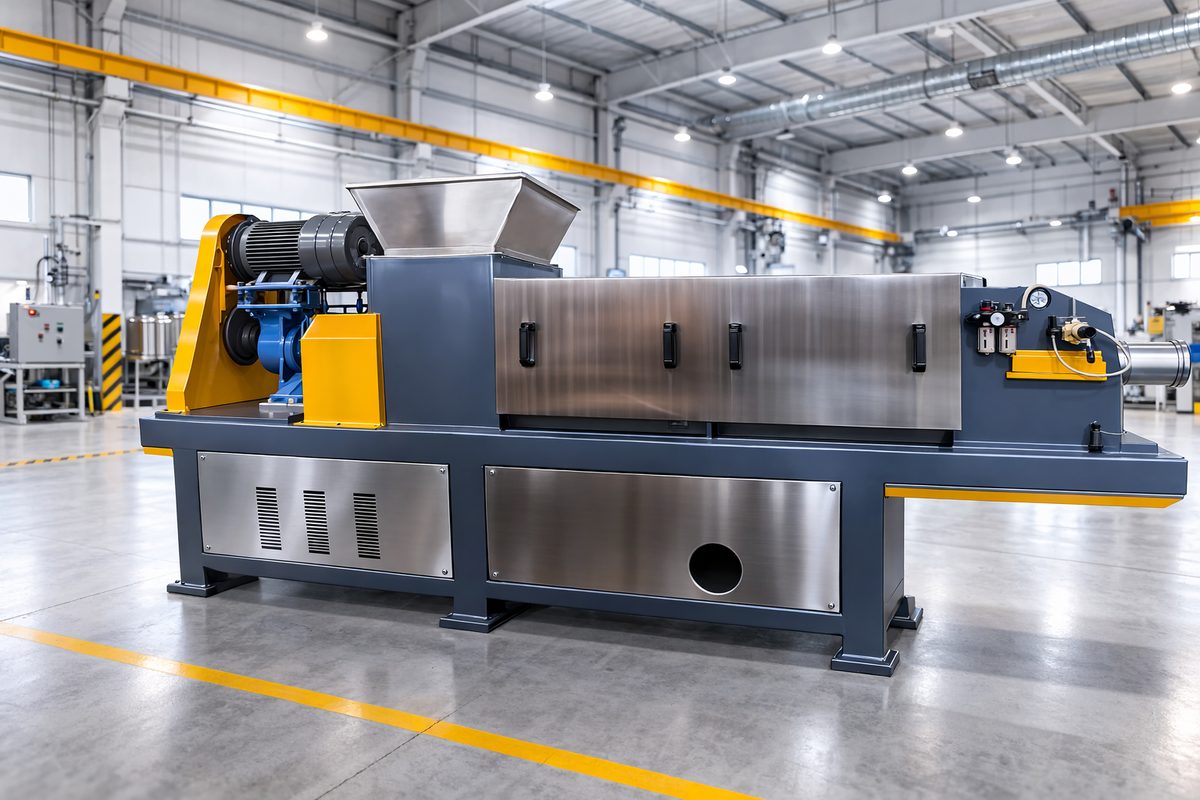
Reduces moisture content mechanically before drying, cutting the energy load on thermal dryers by a significant margin. This is often the highest-leverage single investment in a coastal preprocessing module.
3. Drying
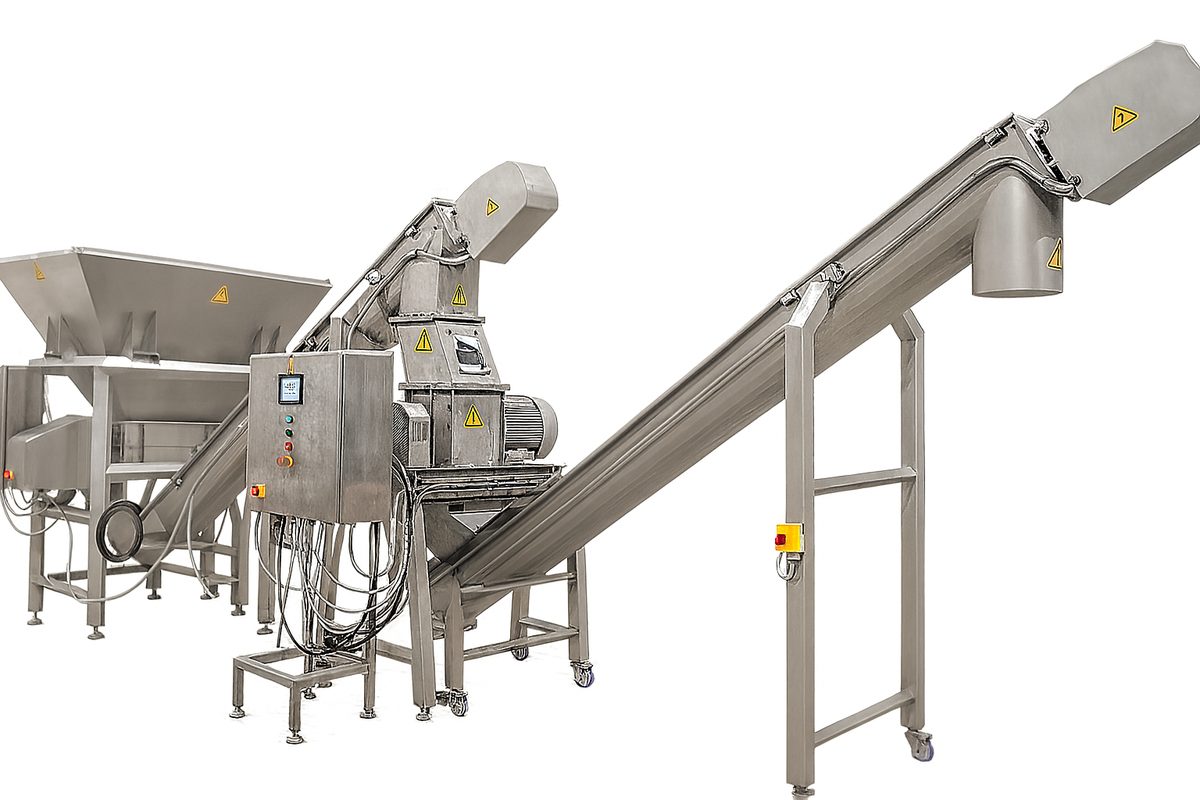
Stabilises biomass for storage and transport. Drying capacity should be sized against actual harvest seasonality, not average annual throughput — seaweed arrives in pulses, not a steady stream.
4. Size Reduction
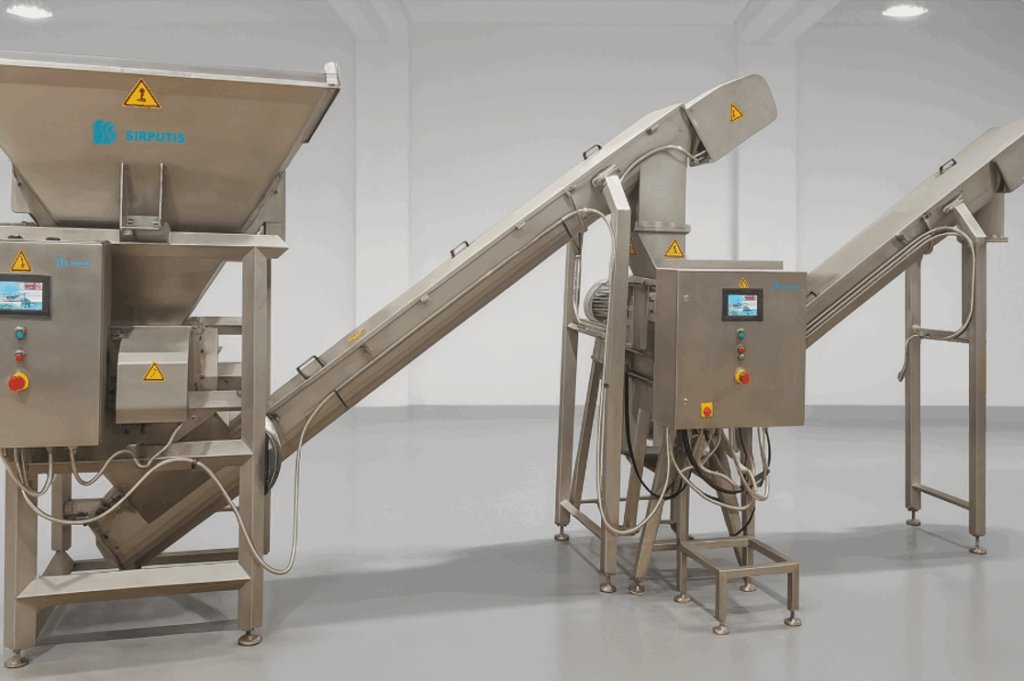
Milling or grinding to the particle size required by the target extraction process. Alginate and fucoidan extraction, for example, have different optimal feed specifications.
5. Extraction
The chemistry stage: alginate, fucoidan, carrageenan, agar, or biostimulant extraction, depending on species and target market. This module is typically centralised even when preprocessing is distributed.
- Coastal modules handle washing, pressing and initial drying near the harvest site.
- Central modules handle size reduction, extraction and refinement.
- Each module can be added, duplicated, or relocated as species mix and volume change.
How a Modular Seaweed Biorefinery Reduces Investment Risk
The practical argument for modularity is capital sequencing. Instead of sizing and building a full biorefinery for projected volumes that may take three to five years to materialise, a processor installs coastal preprocessing capacity first, matched to current harvest, and adds extraction capacity as offtake agreements firm up. This lowers the initial capital outlay and reduces the risk of stranded capacity if a species, a farming partner, or a market shifts.
It also allows a modular seaweed biorefinery to serve multiple, smaller harvest sites that individually could never justify a full-scale plant — a common situation in Nordic and North Atlantic seaweed regions, and increasingly in North America. We are currently in discussion on a project of exactly this type: a joint processing initiative for Alaska seaweed farmers under Prince William Sound Economic Development District, with grant funding of €271,352 already approved and the deal ready to close.
Engineering Considerations Before Specifying a Line
Three questions determine whether a modular seaweed biorefinery will perform as intended:
- What is the harvest profile? Species, seasonality, and distance from coast to processing point set the sizing for washing, pressing and drying capacity.
- What is the target extract? Alginate, fucoidan, carrageenan and agar processes each impose different feed specifications on the upstream modules.
- What is the offtake timeline? This determines how much extraction capacity to build now versus reserve as a future module.
Our work through the EU SeaMark project, including a mechanised seeding machine running at 3 km of grow line per hour and commercially tested with Ocean Rainforest, has reinforced how tightly upstream farming decisions and downstream processing design need to be coordinated. A modular seaweed biorefinery only performs well when it is specified against the actual biomass it will receive, not a generic assumption.
Who Modular Biorefineries Are Built For
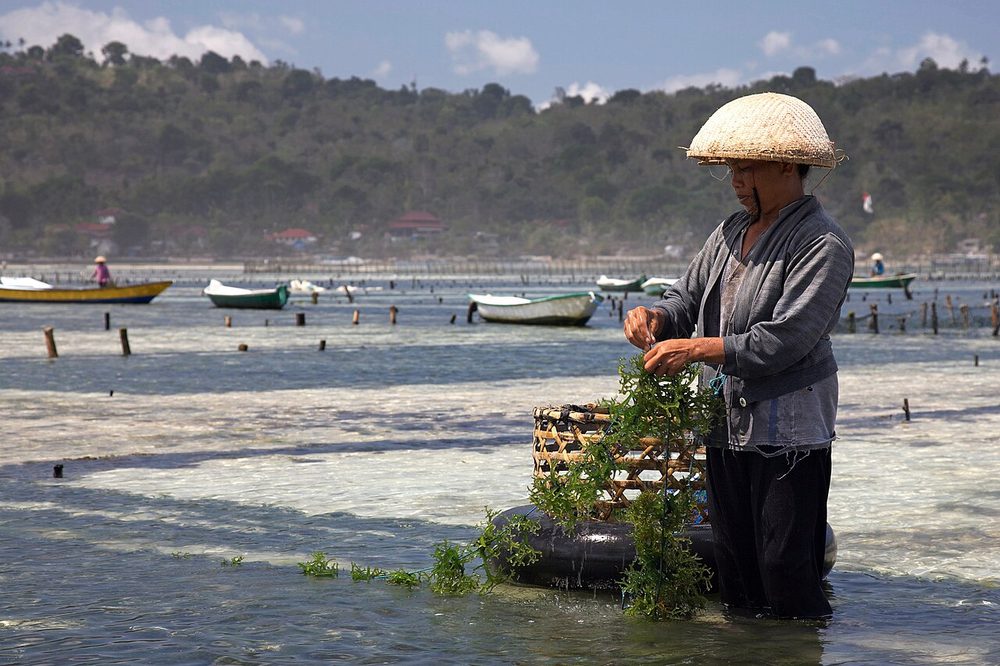
In practice, the buyers of modular seaweed biorefinery equipment fall into three groups: seaweed farming cooperatives that need to stabilise biomass before it can be sold, established processors adding capacity without duplicating existing infrastructure, and investors funding new coastal processing hubs, often alongside farming partners such as our collaboration with Polar Algae in Norway. Each group starts from a different point but converges on the same requirement — capacity that matches actual, current biomass rather than a projected volume five years out.
FAQ
What does “modular” mean in a seaweed processing context?
It means the plant is built from discrete, standardised units — washing, pressing, drying, extraction — that can be installed, duplicated or relocated independently. This contrasts with a conventional plant designed and built as one fixed-capacity system from the outset.
How much does a modular seaweed biorefinery cost compared to a conventional plant?
Costs vary by throughput and target extract, but the modular approach typically lowers initial capital outlay because coastal preprocessing capacity can be installed first and extraction capacity added later, matched to confirmed offtake. This staged spending is the main financial advantage over building full capacity upfront.
Can a modular seaweed biorefinery handle multiple species?
Yes, provided the washing, pressing and drying modules are sized with enough flexibility, and size reduction is adjustable to different feed specifications. Species mix should be defined early, since it affects module sizing and extraction process selection.
To work through the sizing and sequencing for your own site or project, see our seaweed processing solutions or book a 20-minute call with our engineering team.
Sirputis is raising to build a reference biorefinery in Lithuania — see seaweed biorefinery investment: seed round 2026 — and the plants already delivered on the plant references page.
How is alginate extracted from seaweed?
Alginate extraction runs washed, milled brown seaweed through alkaline digestion (sodium carbonate) to form soluble sodium alginate, then clarification to remove fibre, then precipitation as calcium alginate or alginic acid, followed by conversion, dewatering and drying. The seaweed extraction equipment (reactors, separation, filtration, concentration) is sized to species and target purity.
How do you set up a seaweed processing factory?
Define your species, target product and annual tonnage first, then start with a pilot line or single module to validate yield and quality before committing capital. Sirputis engineers the complete line (washing, pressing, drying, milling and extraction), builds it in Siauliai, and commissions it on site as a turnkey seaweed processing plant, so one partner carries the project from concept to running production.
How do you scale up seaweed extraction from pilot to industrial production?
Scale up in stages on one modular platform. A pilot seaweed extraction plant (10 to 500 kg/h) proves the process, a standard 1 t/h module serves early commercial volume, and an industrial plant of up to 6,000 t/y is reached by replicating modules that share the same interfaces. Each stage reuses earlier capital rather than replacing it.
What is the cost of a seaweed processing plant?
Indicative bands from delivered Sirputis orders (ex works Siauliai): a 10 to 500 kg/h pilot line is about EUR 300,000 to 500,000, and a complete seaweed processing line or modular plant runs from EUR 0.5M to 3M and up, depending on capacity, wet or dry route and automation. Single machines start near EUR 40,000.
Related reading: for the wider industry context — market size, the leading players at every stage, and the research, standards and funding ecosystem — see our reference guide to the global seaweed value chain.