
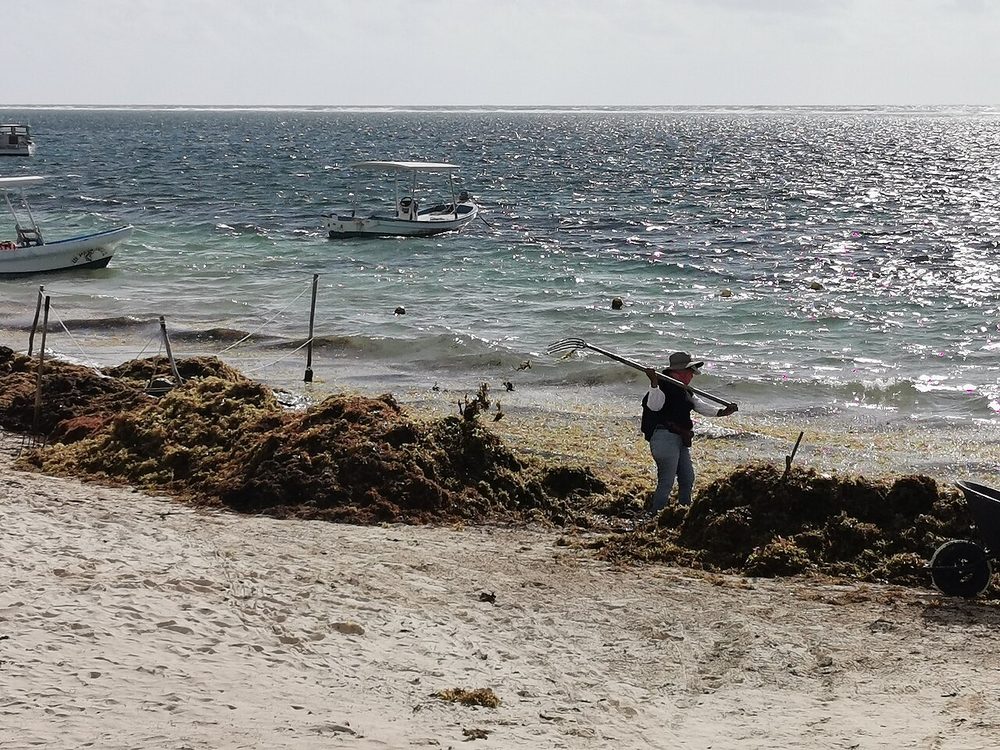
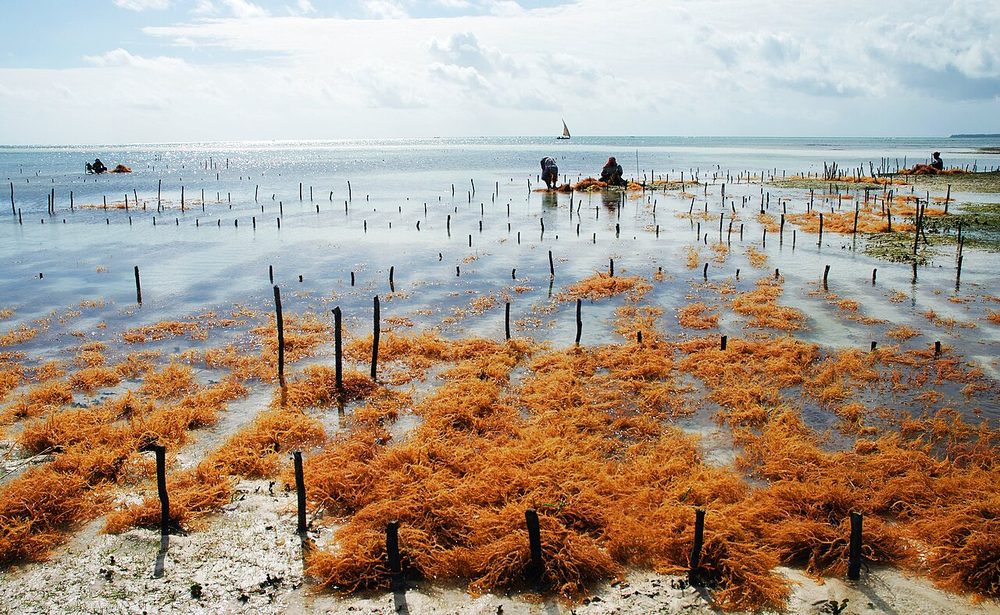
 Photo: Puerto Morelos, Mexico (CC BY-SA)
For NGOs, foundations, donors & coastal authorities
Seaweed Industry Development Programmes
Feasibility, community pilots, and modular processing infrastructure — phased delivery from first study to regional hub.
Three programmes · €9k feasibility → €3m processing hub
Three phased programmes — from a €9k feasibility study to €3m modular processing hubs — structured for donor procurement, state aid and blended finance (NORAD, World Bank, EU instruments).
Sirputis designs seaweed industry development programmes that move from a €9k feasibility study to community pilots and modular biorefinery hubs. We combine cultivation know-how, post-harvest quality control and modular processing systems. The result is technically realistic, locally grounded, and ready for donor funding, public programmes, state aid or blended finance.
Three seaweed industry development programmes — feasibility study, community pilot, biorefinery hub
Our Coastal Community Programme runs in three phases — use one package or sequence all three: from feasibility and partner design (01) to a community processing pilot (02) and a modular seaweed biorefinery hub (03).
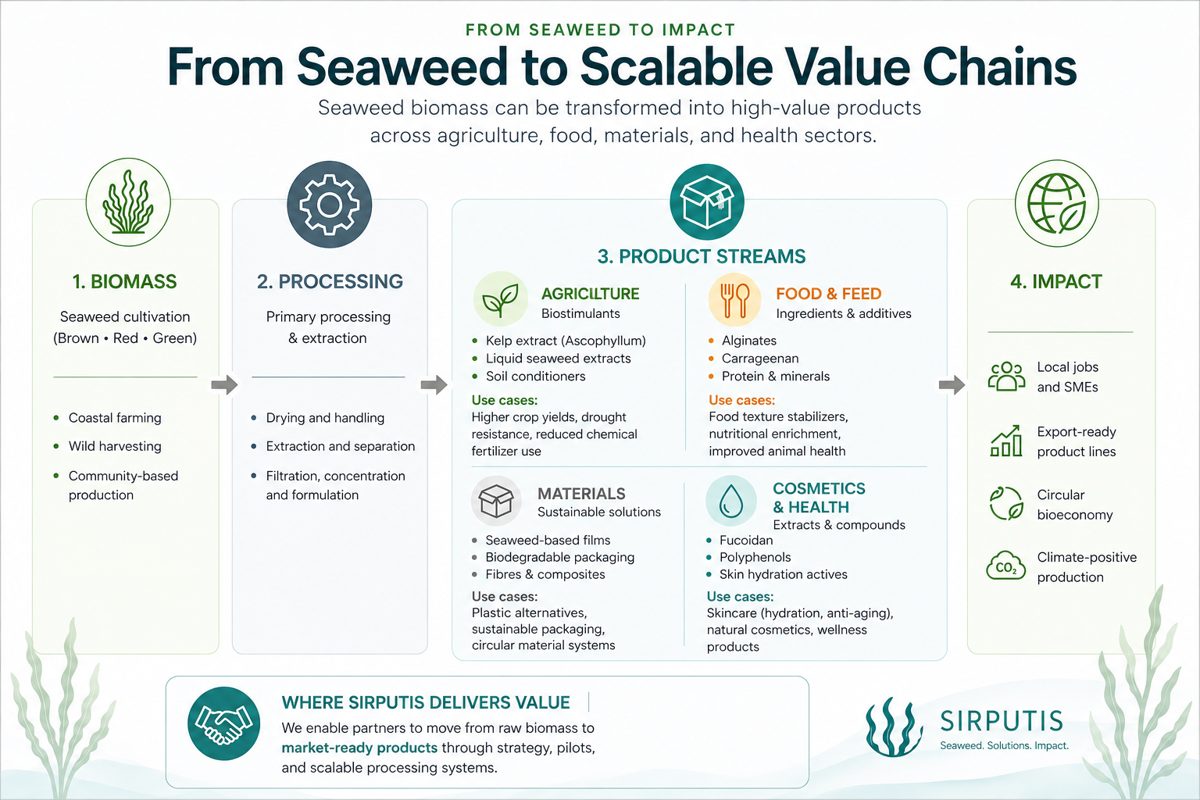

01 — SeaValue Catalyst: seaweed feasibility study (€9k–15k)
Seaweed feasibility and value-chain design — a clear, decision-ready foundation before committing capital.
€9k–15k · 4–8 weeks
- Define geography, species pathway, and delivery model
- Map stakeholders, regulators, buyers, and partners
- Compare 2–3 realistic business-case scenarios
- Deliver a feasibility memo, budget framework, and roadmap
Best suited for donor scoping, programme design, and early-stage planning.
Seaweed feasibility study programme →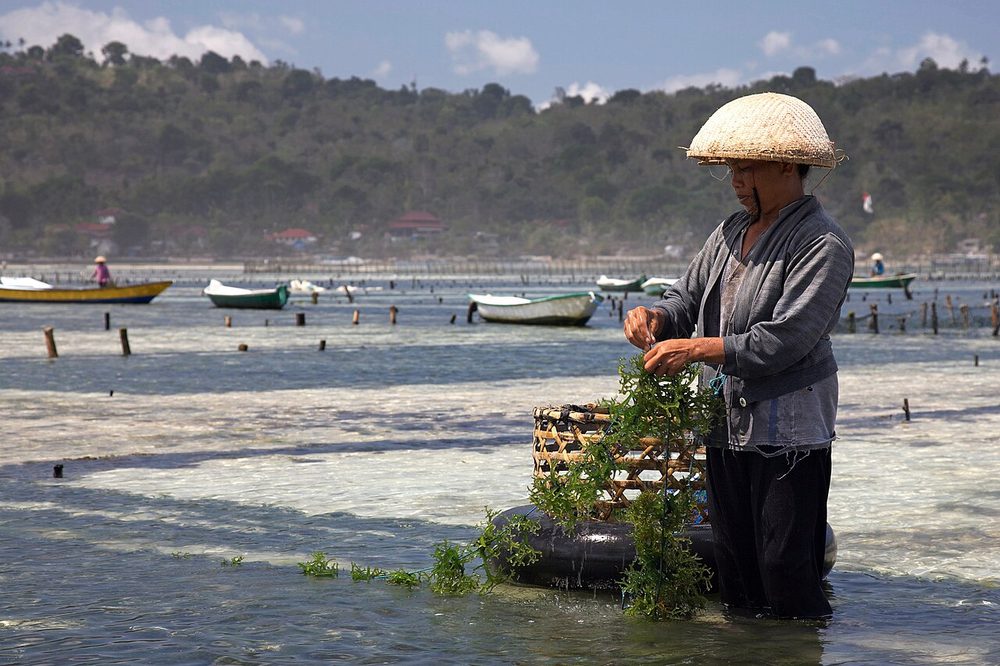

02 — BlueHarvest Launchpad: community seaweed processing pilot (€50k–200k)
Community seaweed pilot with initial local processing — validate the value chain and prepare for scale. This is the pilot phase of the Coastal Community Programme.
€50k–200k · 4–9 months
- Install a compact community processing setup
- Train operators in SOPs (standard operating procedures), hygiene, maintenance and traceability
- Validate 1–2 product routes (e.g., biostimulants, dried inputs)
- Generate operational and reporting evidence for scale-up
Designed to prove viability, strengthen livelihoods, and unlock funding.
Community seaweed pilot programme →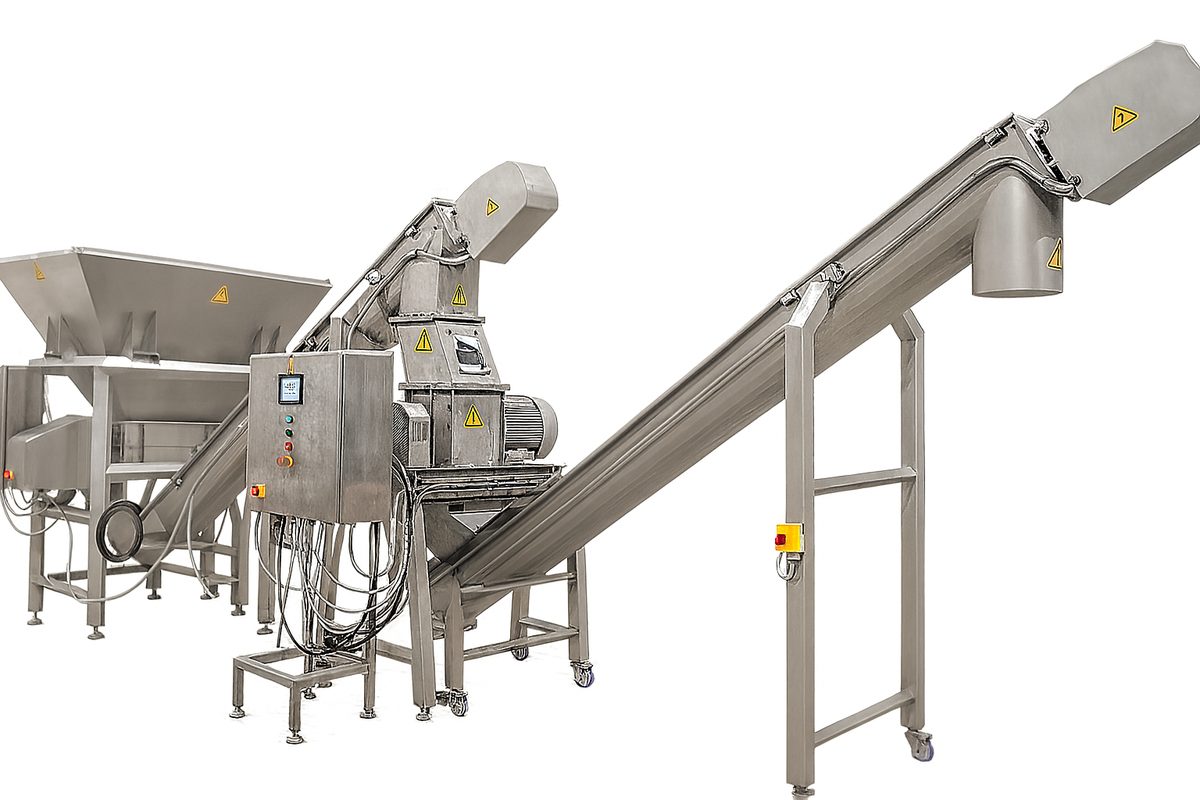

03 — Ocean Circular Hub: modular seaweed biorefinery (€0.5m–3m)
A small modular coastal biorefinery — regional processing capacity built close to the biomass.
€0.5m–3m · 12–24 months
- Build aggregation and processing close to biomass supply
- Enable multiple product streams from one biomass input
- Establish QA (quality assurance), governance, and operational systems
- Prepare for investment, blended finance, and replication
A scalable infrastructure model for long-term processing capacity.
Seaweed biorefinery scale-up programme →Why organisations choose Sirputis
- Value-chain focus — not only equipment procurement
- Local processing and local value retention from the start
- Phased delivery: plan → pilot → validate → scale
- Species-, geography- and infrastructure-specific programme design
- Fit for grants, donor procurement, public programmes, and blended finance
- See the delivered seaweed processing plants and funded projects →
Who this is for
- Foundations funding coastal livelihoods, climate resilience, and blue-economy initiatives
- NGOs delivering seaweed, aquaculture, fisheries, or community enterprise programmes
- Donor programmes, regional funds, and public-sector development initiatives
- Municipalities and coastal authorities building local blue-economy capacity
- Consortia, cooperatives, and delivery partners developing scalable programme pathways
What every programme includes
- Community engagement and stakeholder consultation
- Sustainability safeguards for responsible farming, harvest or collection
- Operator training, traceability and implementation planning
- Risk review, budget framing and next-phase roadmap
- Partner alignment around delivery, procurement and market logic
Typical use cases
- Coastal livelihoods and climate resilience programmes
- Women- and youth-led seaweed enterprise initiatives
- First local processing for biostimulants, fibres, or dried inputs
- Public-sector blue-economy roadmaps and pilot assets
- Regional processing hubs and value-retention strategies
How delivery works
- 01
Discovery
Country, coastline, species, policy goals, and constraints. - 02
Scoping
Market, technical, site, and partner assessment. - 03
Alignment
Roles, funding pathways, safeguards, and delivery model. - 04
Delivery
Advisory, pilot, or infrastructure deployment. - 05
Next phase
Reporting, fundraising, replication, and scale support.
FAQ: funding and delivering a seaweed programme
Can Sirputis adapt a seaweed programme to a specific country or coastline?
Yes. Scope, equipment, and partner mix are localised around species, logistics, permitting, infrastructure, and programme goals.
Can these programmes be funded by grants, donor programmes or public funding?
Yes. The phased structure works well for donor procurement, public programmes, state aid pathways and blended-finance preparation.
Do you start with farming, collection or processing?
That depends on feedstock availability, partner readiness and market logic. Many clients begin with feasibility or a pilot before building full infrastructure.
What do we receive at the plan stage?
Typically, a feasibility memo, partner map, indicative budget, funding roadmap, and a next-step concept note or donor-facing brief.
Are the programmes turnkey?
They can be, but many organisations start with advisory or pilot phases first and expand once technical and funding assumptions are stronger.
How are the programmes financed?
Through grants, DFI (development finance institution) loans and blended finance — grants plus concessional loans plus private capital. The first phase produces the concept note and budget framework a funder needs; see investors & funders.
About SirputisWe design and deliver seaweed processing systems and programme solutions worldwide. Learn more →Complete Processing LinesEnd-to-end seaweed processing solutions — the equipment behind every programme. Learn more →Contact our expertsBased in Lithuania, we work with clients globally. Learn more →
Build your seaweed programme with Sirputis
Tell us about your project, your target country, and your programme goals. Together, we design and deliver practical, locally grounded seaweed solutions for NGOs, foundations, and coastal initiatives.
The model is simple. Development finance pays for the plant. The community — or a local operator — owns it and runs it. Sirputis designs it, builds it, trains the team, and stays on for support. Structured to fit NORAD, World Bank and EU blue-economy instruments. See the SDG mapping per programme, our reference plants & funded projects, and the funders & investors page.