
For investors, family offices, DFIs & programme funders
Invest in seaweed processing — or fund a coastal seaweed programme
Two ways to put capital to work in seaweed processing: invest in the company building the modular biorefinery layer of the blue economy — or fund a coastal programme we design, build and train.
Founded 2019 · Šiauliai, Lithuania · 7-person core team · 5 EU-supported projects across the group (2 held by Sirputis)
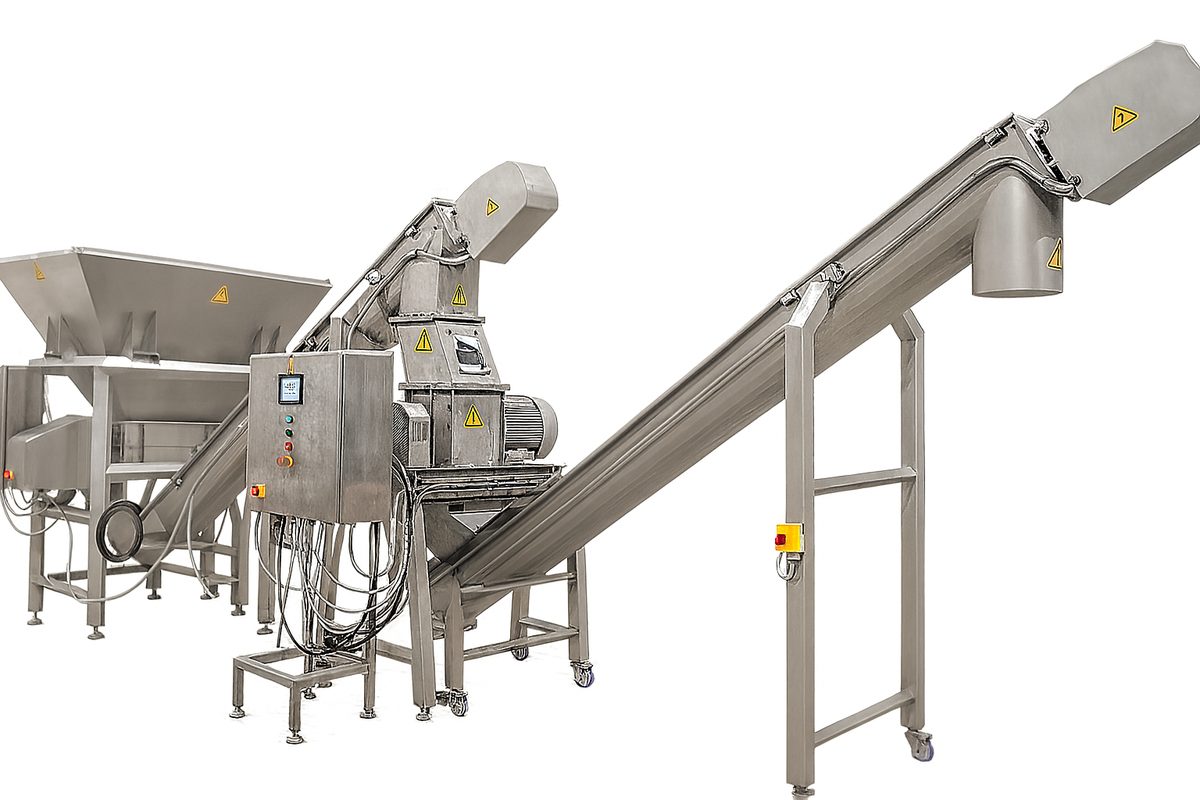
6,000 t/ydesign capacity — wet + dry lines delivered to Polar Algae, Hammerfest (2023; repeat orders 2026)
up to 3 km/hseeding at sea, tested in Horizon Europe SeaMark
€1.4mEU / national support secured by the engineering group (≈ €1.65m incl. KANDAS, the project partner in the stabilisation-system grant)
17countries across the active and qualified project footprint (qualified = signed NDA, LOI or MoU)
1 patentwater-jet harvester, granted June 2025
Why invest in seaweed processing now
The World Bank's Global Seaweed New and Emerging Markets Report 2023 (research by Hatch Innovation Services) sizes ten emerging seaweed markets at up to US$11.8 billion by 2030, with the nearest-term markets — biostimulants, animal feed, pet food and methane-reduction additives — at US$4.4 billion. Every one of those markets starts with the same step: turning wet, perishable coastal biomass into a stable, specified ingredient.
That step is where projects stall. Hatch and FAIRR point to reliable biomass supply as the sector's biggest bottleneck outside Asia — and biomass only becomes supply once it is harvested, stabilised and processed to a buyer's specification. Sirputis builds exactly that layer: seeding and harvesting equipment on the supply side, and modular seaweed processing equipment and biorefineries on the processing side.
Three things make this a seaweed biorefinery investment rather than a research bet. First, the equipment is already delivered and running — a 6,000 t/y design-capacity plant above the Arctic Circle, a pilot line for SINTEF, a seeder tested at sea. Second, modular deployment: a standard module is fabricated in Šiauliai and commissioned in months, so capacity follows demand instead of preceding it. Third, four revenue layers per module — equipment sale, protocol licence, service and monitoring, optional downstream upside — so growth does not require Sirputis to own every plant.
Blended finance and impact capital are the natural co-investors: the same modules that a processor buys are what a development funder pays for in a coastal programme, which is why both tracks sit on this page.
Sources: World Bank, press release 16 Aug 2023 and the report; FAIRR, Seaweed and regenerative aquaculture need more investment.
Invest in Sirputis — seed round 2026
EQUITY · DATA ROOM ON REQUEST · TICKET RANGE DISCLOSED IN THE DATA ROOM
Thesis: processing is the bottleneck between seaweed supply and high-value markets. Sirputis owns that layer with standard modules deployed close to the biomass — sold as equipment, licensed as protocols (the operating recipe, QA standards and process know-how for a product route), serviced for years.
- Infrastructure gap — coastal biomass projects fail on processing discipline, not on biology.
- Modular entry point — standard modules avoid capex-heavy single-site refinery risk and deploy in months.
- Buyer-backed routes — biostimulant, alginate, fucoidan and materials routes create several demand paths.
- Four revenue layers per module — equipment sale, protocol licence, service & monitoring, optional downstream upside.
Use of funds: build a Lithuania-based reference plant and its operating data room; convert contracted and MoU pipeline into commissioned deployments; validate product routes with buyers.
Fund a seaweed development programme
FOR NGOs · FOUNDATIONS · DFIs · COASTAL AUTHORITIES
From a funder's seat the question is procurement, ownership and who is accountable. The answer: you procure a phased programme with a fixed scope and price band; the community, cooperative or local operator owns the plant; Sirputis is the accountable engineering partner that designs, builds, trains and stays on for support. Evidence packages after each phase let you release the next tranche on results, not promises.
- 01 — SeaValue Catalyst — feasibility & value-chain design · €9k–15k · 4–8 weeks
- 02 — BlueHarvest Launchpad — community pilot with local processing · €50k–200k · 4–9 months
- 03 — Ocean Circular Hub — modular processing hub at regional scale · €0.5m–3m · 12–24 months
- Structured for donor procurement, state aid and blended finance — designed to fit NORAD, World Bank and EU instruments.
Key facts
- Legal name
- UAB Sirputis (SIRPUTIS UAB)
- Company code
- 305239733
- VAT
- LT100014004618
- Founded
- 28 August 2019 (registered 4 September 2019)
- Legal form
- Private limited company (UAB), Lithuania
- Registered office
- Dubijos g. 16, Šiauliai, LT-77172, Lithuania
- Financial year
- 1 January – 31 December
- Engineering group
- Design and fabrication with UAB Metal Production, Šiauliai
- Registry
- Lithuanian Register of Legal Entities (Registrų centras)
Updated 4 September 2026
Investor documents & data room
| Document | Date | Action |
|---|---|---|
| Seaweed Industry Development Programmes — catalogue | 2026 | Download programme catalogue (PDF) |
| Seaweed processing plant references & funded projects | Sep 2026 | Open plant references |
| Modular seaweed biorefinery guide | Sep 2026 | Open the biorefinery guide |
| Sustainability & SDG impact evidence | Sep 2026 | Open impact evidence |
| Investor deck & data room (seed round 2026) | Sep 2026 | Request investor deck |
| Financial statements FY2025 (qualified investors) | 2026 | Request statements |
| Responsible business & supply-chain statement | In signature · Q4 2026 | Notify me |
Leadership team

Morten Kroslid
CEO & Co-Founder
10+ years in seaweed and the blue economy; leads strategy, programmes and capital.

Jonas Kamašauskas
CTO & Co-Founder
Containerised biorefinery design; prepares every technical offer and line design.

Paulius Skėrys
Technical Sales & Project Manager
Technical sales and project delivery; runs the Eurostars-3 R&D project with the engineering group.

Matas Petrulevičius
Technical Project Manager
Deployment and commissioning; runs delivery milestones and supplier gates.
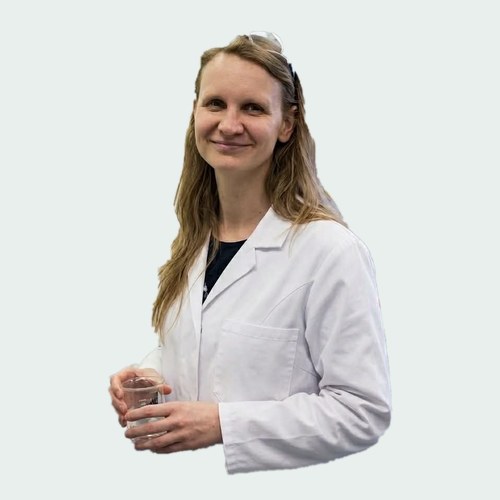
Lina Eidukevičienė
Biochemist
Extraction performance and quality control across product routes.
Finance and grant management are led by the group CFO; sales by Ali Mokdad, Sales Manager. The wider Sirputis / Metal Production platform has engineered 100+ processing projects. Meet the whole team → · Partners we build with →
Impact for blue-economy funders — SDG 14 and coastal livelihoods
Every Sirputis programme is capped by a site resource assessment (SDG 14), trains local operators who run the plant themselves (SDG 8), deploys modular processing infrastructure in 12–24 months (SDG 9) and designs discards out through whole-biomass use (SDG 12). The mechanism behind each goal — and the worked resource arithmetic — is on the sustainability & SDG impact page, written so a programme officer can lift it into an approval memo.
How we work — signals that matter to diligence
Status-labelled references
Every reference on this site is labelled by status — delivered, in delivery, field-tested or granted — with client, place and date. We do not publish pipeline as references.
Audit-trailed operations
Client communications, offers, supplier awards and project gates are logged in our CRM — who, when and why — and SLA misses are reported by name. Auditable on request.
Capital discipline
Customer-financed delivery with milestone-gated supplier payments; each scale step requires executed contracts, verified feedstock and funded project economics.
Non-dilutive track record
Five EU / national projects with ≈ €1.4m in public support secured by the group — Horizon Europe, Eurostars-3, I3 (EU Interregional Innovation Investments) and Lithuanian innovation instruments.
Investor FAQ
What exactly does Sirputis sell?
Seaweed processing equipment, complete lines and modular biorefineries — plus three coastal development programmes. We do not grow, buy or sell seaweed and we do not operate plants.
What is the seed round for?
Building a Lithuania-based reference plant with an operating data room, converting contracted and MoU pipeline into commissioned deployments, and validating product routes with buyers.
How do programme funders and equity investors relate?
The same modules a processor buys are what a development funder pays for in a coastal programme. Programme revenue de-risks the equity story; equity funds the reference asset that programmes point to.
Where can I check the claims?
On the plant references & funded projects page — grant numbers, CORDIS records, delivery status per reference — and in the data room under NDA.
Talk to the founders directly
Investors: Morten Kroslid, CEO — morten@sirputis.com · +47 48 88 67 50. Programme funders and partners: info@sirputis.com. Or pick a slot in the calendar — no gatekeeping.